How to Design Your Handfasting Ceremony in North Wales
The origins of handfasting are shrouded in myth and mystery, much like North Wales itself, but language linking love and the tying of a cord can be found spanning many ages and countless translations. If you’re considering this symbolic and highly personalisable alternative to more traditional commitment ceremonies, you’ll know that there are already plenty of guides, how-tos and extended (if not always entirely accurate) histories out there. This is not another one of those. Instead, I’ll help you imagine how your handfasting ceremony could look, how to make it meaningful for your relationship, and how it’s all connected to the wild and wonderful place you’ve chosen to get married - North Wales.
Why handfasting ceremonies and North Wales weddings tie together so beautifully:
I’m sure it’s no coincidence that the same couples who are drawn to handfasting are so often called to get married in North Wales, and vice versa. Getting married here, you’re already choosing beaches over ballrooms, crags and coastlines over city halls, and a connection with the earth over the oversight of a church. You’ve shrugged off the shoulds of traditional weddings, choosing North Wales to commit in a deeply intentional way, and handfasting is just another expression of this same sentiment.
I personally love the undercurrent of playful rebellion that exists within a handfasting. Unlike the traditional exchanging and wearing of rings, handfasting leaves no lasting visible symbol that it ever happened. This makes the commitment feel anti-performative, completely pure and honest in its intimacy. Such a private pledge is often appealing to the same kind of couple who appreciates the sense of perspective gained from a towering mountain or unsettled sea - it feels meaningful, in a very grounded way.
There’s also something very egalitarian about handfasting, a lovely symbolism in the tactile nature of the touching of hands as promises are made, and it encompasses everything the patriarchal wedding traditions are not. You really get to define what marriage looks like to you and reflect that in your handfasting, because there are endless options for making it your own. Whether you have one cord or twenty, and whatever you choose to have them made from, it can be as simple or as complex as you want.
You’ll find lots of ideas and inspiration for different ways you can go with your handfasting a little later, as well as stories from real couples who included this in their North Wales weddings.
What does a celebrant do at a handfasting?
While a celebrant at your North Wales handfasting isn’t mandatory, they are a great idea to hold the space for the ceremony and transform a nice idea into an emotive, symbolic ritual that means something. When I work with couples to incorporate handfasting into their ceremony, my job is to craft the arc of the whole thing so it flows and makes sense. I also ground the tone in what’s important to you, whether you prefer to keep things lighthearted and humorous or more sincere and emotional.
Above all, I’m there to explain the handfasting so everyone understands what they’re witnessing - both practically and symbolically. I’ll ensure it feels right for you and doesn’t lean religious or Pagan if that’s not what you want, shaping the mood of the ceremony so it feels like it could only ever have been yours.
I can also guide you on the logistics of the handfasting, such as:
The types of cords you can choose from, or make
The different knots that can be used in the tying, and what they might mean
The symbolism of each part of the handfasting
How to get your friends and family involved, if you want to
Choosing the right kind of handfasting for you (you’ll find more on this later)
Perhaps most importantly of all, I’ll be the person who guides and leads the handfasting ritual itself, including the placement, wrapping and knot tying - whether it’s me that physically does this, or someone else.
How to include handfasting in your North Wales wedding ceremony
The handfasting normally happens around the part of the ceremony where you say your vows, sometimes simultaneously. The exact words I use are different between couples, but I usually like to speak about:
Why you’ve chosen to include a handfasting and what it means to you
A little on the symbolism of the practice
The cords and colours chosen, and what these represent
Any links between the place you’ve chosen to marry, and the handfasting ritual
Your loved ones, guests or witnesses can also get involved or have specific jobs, such as looking after the cord before or after the ritual or even coming up to place cords or tie knots.
There are no rules to handfasting, so however you’d like to incorporate it, we’ll make it happen. Most couples come to me with ideas for how they’d like to include it in their ceremony, and together we design it very intentionally to make it completely, utterly your own.
Handfasting in Cheshire/North Wales: how the place becomes part of the practice
North Wales particularly weaves itself into different interpretations of a handfasting, and sometimes it feels right to draw comparisons with the scenery and surroundings and the inherent meaning of the ritual being performed.
Louise and Tom’s handfasting included vows inspired by the elements - earth, air, fire, water, wind. It took place at Groobarbs Wild Farm, a restaurant with a farm which grows all its own produce. Holding a ceremony so connected to the earth was a poignant moment for the couple.
Paul and Gina spoke about security and support as they committed to one another on a mountain in Eryri, vows which felt particularly fitting against the backdrop of such natural steadfastness.
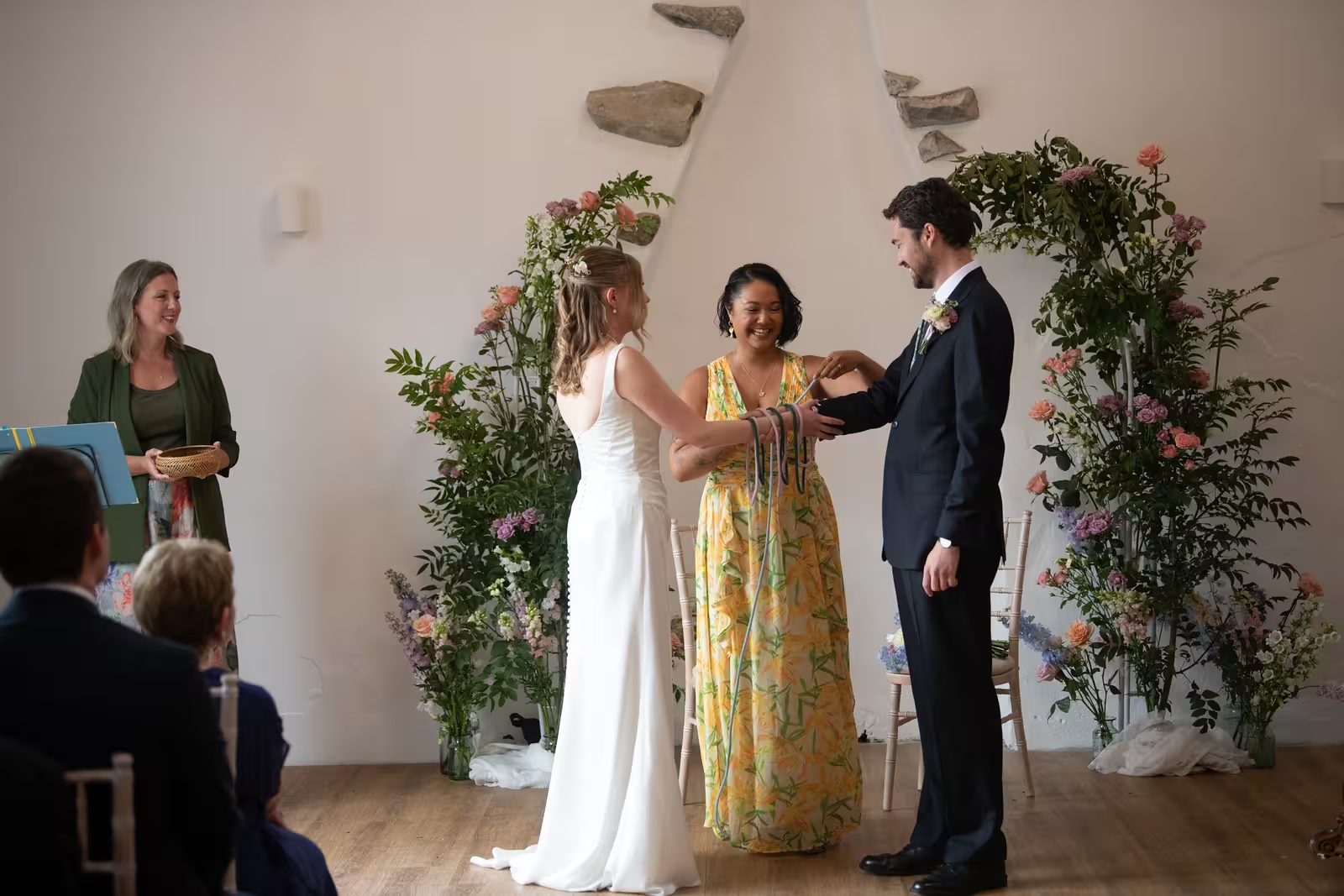
Emily and David had a handfasting at their Talhenbont Hall wedding, a venue nestled in the countryside and surrounded by woodland. Their close friends and family laid cords over their hands, which we knotted together - symbolic of the community of support surrounding them.
If you’re eloping or having an outdoor ceremony in North Wales, your natural surroundings can be connected with your handfasting as much or as little as you like, but present a natural opportunity to ground yourselves in the place you’ve chosen. When we work together to design your ceremony, we can discuss how much of a feature you’d like these connections to have.
Different types of handfasting, and real North Wales handfasting weddings - time to get inspired!
There are endless ways to personalise your handfasting ceremony. You can choose the number, style and colour of the cords, and some couples even choose to make them themselves. Take inspiration from the ideas below, and discover real weddings to see how it looks in practice:
Consider making the cords yourself out of fabric with sentimental meaning, such as climbing ropes to reflect a shared hobby. Couples have also used the clothes of late loved ones to make the cords, or asked loved ones to make them as a way of including them in the ceremony and adding more layers to the ritual
Use handfasting as a way to involve your friends and family. Some couples clasp their hands together, and have their guests come up individually to lay cords, ribbons or ropes in individual strands. You can make a moment out of this by having them say a few words to you, or give a little blessing or just a hug, before returning to their seats.
Choose specific knots to tie once the different cords are all in place, such as an infinity knot which of course has symbolic meaning
Have woven Celtic-style cords specifically made for you, with specially selected colours and decorations like shells, feathers or gems. The cord is usually laid over your hands and then tied by you, sealing in the vows
Real North Wales handfasting weddings:
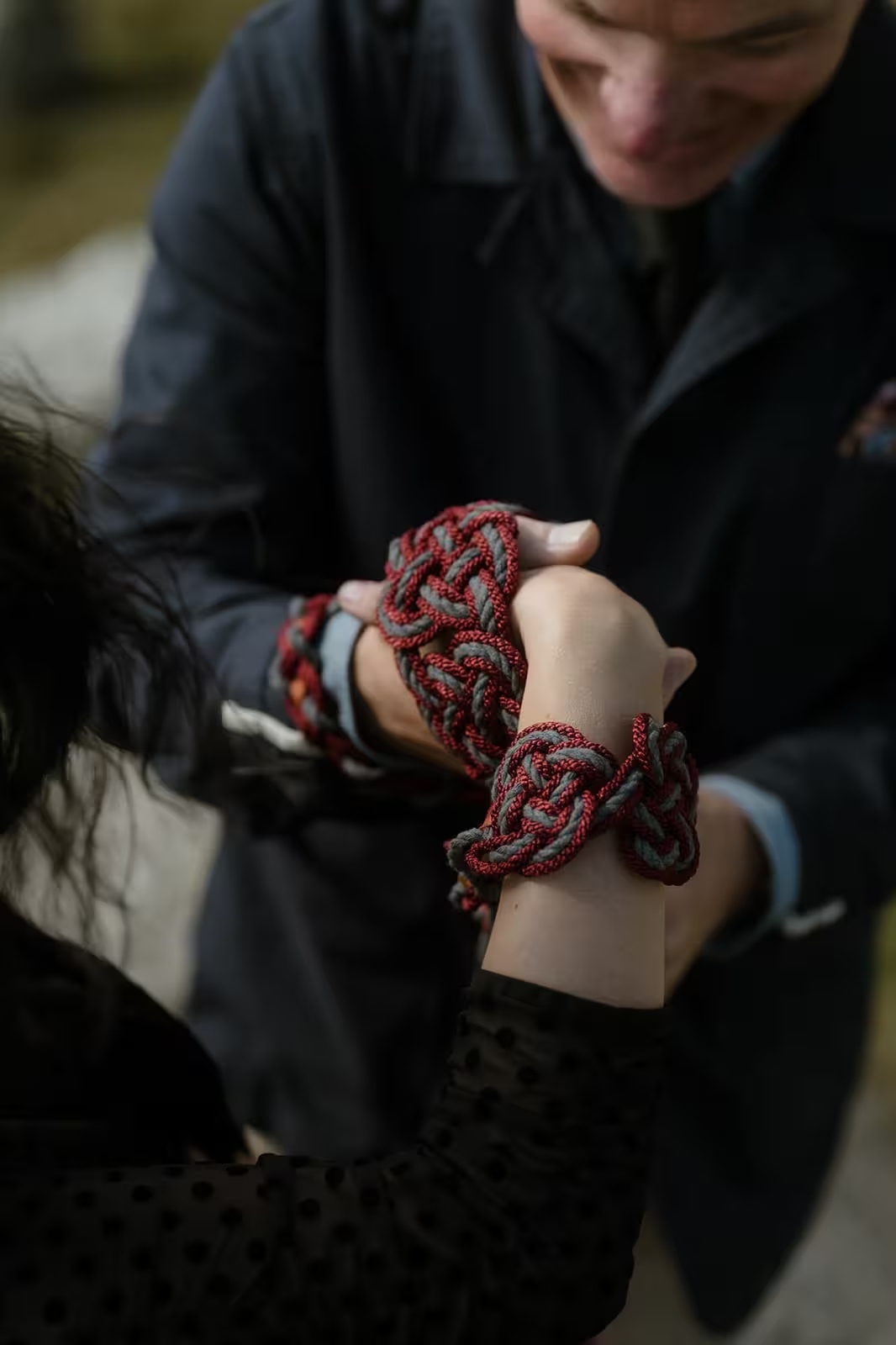
Paul and Gina’s handfasting took place on a mountain in Eryri - just me, them and their dog - and they picnicked after their vows and ritual and made a week of it, camping in the area. This wedding felt really connected to the setting, and used beautiful knotted burgundy and storm grey ropes. During their ceremony, we drew parallels between the wind and rain and openness and growth, and the strength between the two of them and the mountains around us.
Chloe and Rich got married in the Conwy Valley, hiring a holiday rental for all their loved ones to stay together in, and holding their ceremony outdoors in the gardens. This couple are a pair of climbing enthusiasts, so what better to use in their handfasting than climbing ropes for a personal touch?
Chloe & Richard's Alternative Handfasting Cords
Emily and David’s handfasting was performed in part by their guests, who took it in turns to come and lay cords of greens and pinks. Involving them in the ceremony was fitting, as they all spent a week together at their countryside estate venue.
Emily and David had help from friends and family
Chloe and Usen chose cords with specific symbolic colours. Green, for the colour of the emerald in Chloe’s ring, for the heart and for growth, and gold to symbolise propensity and endurance. These were intertwined with white, for peace and a new beginning, and they had an infinity knot woven through the middle. They each tied a knot during their vows, and their daughter joined them to tie the third, symbolising their family unit.
Chloe & Usen's Outdoor Handfasting Ceremony
If you’re looking for a celebrant to cultivate your handfasting ceremony in North Wales, whether at one of its spectacular wedding venues or at a wild outdoor location, I have lots of experience helping you tell your unique story through the medium of cords, ropes and threads. Get in touch to talk about your one-of-a-kind ceremony, done your way.
Kate Rostance is a humanist wedding celebrant based in North Wales. She creates ceremonies that are relaxed and full of meaning - with a touch of humour and plenty of heart. She works across North Wales, including Snowdonia, Anglesey, Gwynedd, the Llyn Peninsula, Cheshire and beyond.